

Concordia Seminary Newsroom
Preparing for the Work Ahead
For Jim Lewis, the gifts God has entrusted to him have a clear purpose: to be used in service to Christ and His church. “The Lord has given us everything that we have,” Lewis says. “Each of us is responsible for being good stewards of how we use those gifts.”
Through his ongoing support of Concordia Seminary, Lewis is putting this conviction into action, helping to ensure that future pastors and deaconesses are formed to serve congregations and other ministries across the country and around the world.
SHAPED FOR SERVICE
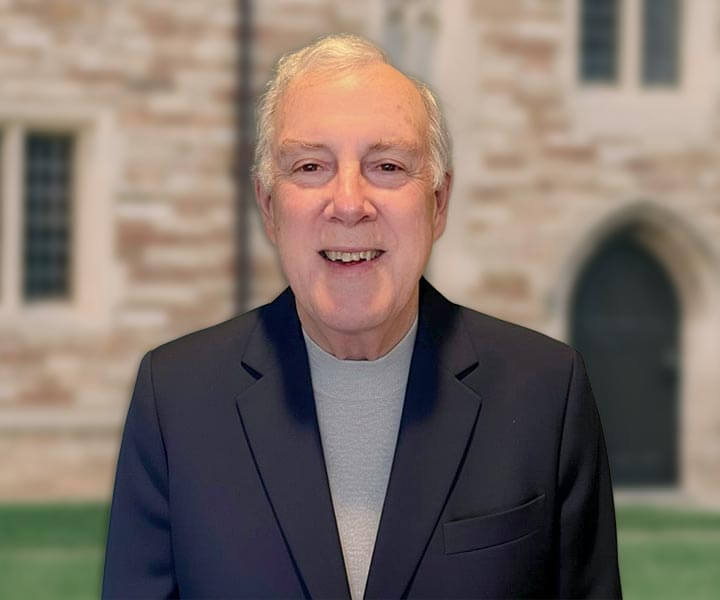
Born in Lansing, Mich., and raised in nearby East Lansing and Okemos, Lewis grew up in a family shaped by both professional excellence and active service. His father, a mechanical engineer, contributed to major automotive innovations while his mother devoted herself to community organizations throughout the region.
After graduating from Okemos High School, Lewis pursued a Bachelor of Science in Pharmacy from Ferris State University, Big Rapids, Mich., and became a licensed pharmacist in 1974. He served in community and long-term care pharmacy settings before making a pivotal decision that would shape the course of his career.
“After considerable self-reflection,” he says, “I made the decision to pursue a career in the pharmaceutical industry. This was probably the most important decision of my professional life.” Lewis went on to serve in a range of sales and marketing roles with DuPont Pharmaceuticals, as well as in the biotechnology field with Roche and Genentech. Throughout his career, he contributed to teams advancing treatments for cardiovascular, neurologic and infectious diseases.
RECOGNIZING THE NEED
Although Lewis had supported both Concordia Seminary, St. Louis and Concordia Theological Seminary, Fort Wayne, Ind., for many years, his understanding of the church’s needs grew through a personal connection.
A conversation with a family member, a graduate of Concordia Seminary, opened his eyes to a growing challenge: the needs of congregations are outpacing the number of pastors being raised up. “Most Lutherans are not aware of this imbalance,” Lewis says. “You realize it when your congregation needs to call a pastor and there is no one readily available.”
Having served as president of a congregation in Newark, Del., that unexpectedly lost its pastor, Lewis saw firsthand the impact of that shortage. Congregations without a pastor often struggle to maintain stability and growth. He also came to understand the financial reality facing the seminaries. “I was surprised to learn that about 90% of the seminaries’ support comes from members and donors,” he says. To fulfill the Great Commission, Lewis believes the church must invest intentionally in forming future church workers.
GIVING WITH PURPOSE
For Lewis, supporting Concordia Seminary is not simply charitable giving; it is a direct investment in the future of the church. He emphasizes that pastoral and diaconal ministry is deeply personal and relational, a “high touch” vocation requiring spiritual, emotional and intellectual formation. While technology may assist that work, it cannot replace it.
At the same time, he recognizes the importance of strengthening the Seminary’s capacity to form future church workers. Many campus facilities are several decades old and require renewal to support the next generation of students. Given these realities, Lewis chooses to give in a way that allows the Seminary to respond where the need is greatest. “The seminaries have a much better understanding of where they need to invest,” he says. “I trust them to use the resources where they are most needed.”
LOOKING AHEAD
Supporting Concordia Seminary is both a responsibility and an opportunity to serve in a lasting way. Having seen firsthand the need for pastors and the challenges congregations face without them, Lewis encourages others to recognize the importance of investing in the formation of those preparing for ministry.
With most of the Seminary’s funding coming from donors, he views faithful giving as an essential part of sustaining that work — strengthening congregations and helping prepare future church workers to serve where they are needed most.
“This is the best investment that I or any other member of the church could ever make. It helps ensure that we have pastors and deaconesses to serve the church now and in the future, for our children and grandchildren.”