

Theological Symposium
35th Annual Theological Symposium
Sept. 16-17, 2025
Nicaea 1700
The Council of Nicaea has been the touchstone for orthodoxy for the past 1,700 years. In approach and content, Nicaea has served as the model for dealing with doctrine, discipline and relations between churches. Lutherans have long appreciated the accomplishments of Nicaea, believing it still has lessons for the church today.
This symposium seeks to answer questions such as: How does a Christian not only recite but also live out the Creed? How does Nicaea provide a framework for dealing with issues the church faces today?
Registration
We are grateful for the overwhelming interest in this year’s Theological Symposium. Thank you. Our registration is now closed and we have reached capacity. If you would like to be notified of any openings or information about next year’s Theological Symposium, please contact the Continuing Education office at [email protected].
Symposium Highlights
• Plenaries
- “Nicaea’s Paradigm Status for the Oecumenical Faith” presented by Dr. John McGuckin, Archpriest of the Orthodox Church in the Patriarchate of Romania’s Western-European Archdiocese; Professor of Theology at Oxford University, Wellington Square, Oxford; and Nielsen Professor Emeritus at Union Theological Seminary, New York, N.Y. and Columbia University, New York, N.Y.
- “We Believe: Confessing and Experiencing the Nicene Creed” presented by Dr. Joel Elowsky, Professor of Historical Theology, Dean of Advanced Studies and Director of the Center for the Study of Early Christian Texts, Concordia Seminary, St. Louis, Mo.
- “Where True Joys are Found: The Desire of Our Hearts, the Relevance of the Nicene Creed and Our Lord Jesus Christ” presented by Dr. Todd Hains, Associate Publisher, Acquisitions and Development, Lexham Press, Bellingham, Wash.
• 10th Annual Dr. Jack Dean Kingsbury Lecture in New Testament Theology
- “The Colossus from Nazareth: Jesus and the Unclean Spirits in the Gospel of Mark” presented by Dr. David Lewis, Associate Professor of Exegetical Theology and the Dr. Jack Dean Kingsbury Professor of New Testament Theology, Concordia Seminary, St. Louis, Mo.
• LCMS Foundation Event
- Sept. 15 Cardinals Baseball Game (limited seating)
Schedule
Tuesday, Sept. 16, 2025
| TIME | EVENT | DESCRIPTION |
|---|---|---|
| 7:45-8:30 a.m. | Registration open | Sieck Hall Foyer |
| 7:45-8:30 a.m. | Refreshments | Sieck Hall 201/202 |
| 7:45 a.m.-4 p.m. | Coffee and Sponsor Fair | Coffee available all day Sieck Hall 201/202 |
| 8:30-9 a.m. | Chapel | Service of the Word Chapel of St. Timothy and St. Titus |
| 9-9:45 a.m. | Registration Reopens | Sieck Hall Foyer |
| 9:45-10 a.m. | Welcome | Dr. Thomas J. Egger, President of Concordia Seminary, St. Louis Dr. Kevin Golden, Associate Professor of Exegetical Theology, Director of Resident Field Education and Dean of Theological Research and Publication, Concordia Seminary, St. Louis Werner Auditorium |
| 10:15-11:15 a.m. | Plenary | Nicaea’s Paradigm Status for the Oecumenical Faith Dr. John McGuckin, Archpriest of the Orthodox Church in the Patriarchate of Romania’s Western-European Archdiocese; Professor of Theology at Oxford University, Wellington Square, Oxford; and Nielsen Professor Emeritus at Union Theological Seminary, New York, N.Y., and Columbia University, New York, N.Y. Werner Auditorium |
| 11:30 a.m.-12:30 p.m. | Lunch | Koburg and Wartburg Halls |
| 1-2 p.m. | Plenary | We Believe: Confessing and Experiencing the Nicene Creed Dr. Joel Elowsky, Professor of Historical Theology, Dean of Advanced Studies and Director of the Center for the Study of Early Christian Texts, Concordia Seminary, St. Louis Werner Auditorium |
| 2:15-3 p.m. | Sectionals 1 | (see below) |
| 3:15-4 p.m. | Sectionals 2 | (see below) |
| 4:30-6:30 p.m. | Beer and Wine | East Courtyard, Koburg and Wartburg Halls |
| 5-6:30 p.m. | Dinner | This year, we’re excited to offer a special complimentary Louisiana-themed dinner, hosted by the Forged by Fire food ministry. All symposium guests are warmly invited to join our Seminary community for this unique dining experience, Jambalaya Fest. East Courtyard (in case of inclement weather, Koburg and Wartburg Halls) |
| 7-8:30 p.m. | Lecture | 10th Annual Dr. Jack Dean Kingsbury Lecture in New Testament Theology The Colossus from Nazareth: Jesus and the Unclean Spirits in the Gospel of Mark Dr. David Lewis, Associate Professor of Exegetical Theology and the Dr. Jack Dean Kingsbury Professor of New Testament Theology, Concordia Seminary, St. Louis Werner Auditorium |
Wednesday, Sept. 17, 2025
| TIME | EVENT | DESCRIPTION |
|---|---|---|
| 8-8:30 a.m. | Refreshments | Sieck Hall 201/202 |
| 8 a.m.-1 p.m. | Coffee and Sponsor Fair | Coffee available all day Sieck Hall 201/202 |
| 8:30-9:30 a.m. | Chapel | Divine Service with Holy Communion Chapel of St. Timothy and St. Titus |
| 10-11 a.m. | Plenary | Where True Joys are Found: The Desire of Our Hearts, the Relevance of the Nicene Creed and Our Lord Jesus Christ Dr. Todd Hains, Associate Publisher, Acquisitions and Development, Lexham Press, Bellingham, Wash. Werner Auditorium |
| 11:30 a.m.-12:30 p.m. | Lunch | Koburg and Wartburg Halls |
| 1-1:45 p.m. | Sectionals 3 | (see below) |
| 2-2:45 p.m. | Sectionals 4 | (see below) |
| 3-3:15 p.m. | Closing/Sending | Rev. Mark Barz, Chaplain Erika Petsch, Director of Continuing Education, Concordia Seminary, St. Louis Werner Auditorium |
Sectionals
Tuesday, 2:15-3 p.m.
The Christology of the Seven Ecumenical Councils
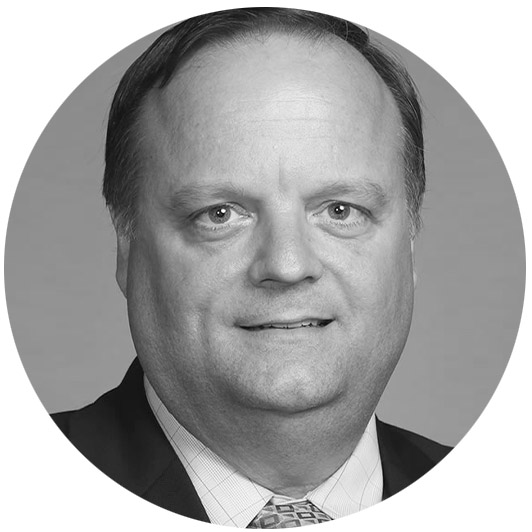
Dr. David Maxwell, Professor of Systematic Theology and Chairman of the Department of Systematic Theology, Concordia Seminary, St. Louis
Nicaea is the first ecumenical council and holds pride of place among the councils. However, it does not answer every question. This presentation will explore how later councils built on Nicaea to address new questions not envisioned by the Council of Nicaea.
Werner Auditorium
The History and Meaning of “Apostolic Church” in the Creed of Nicaea and its Implication for Mission Today
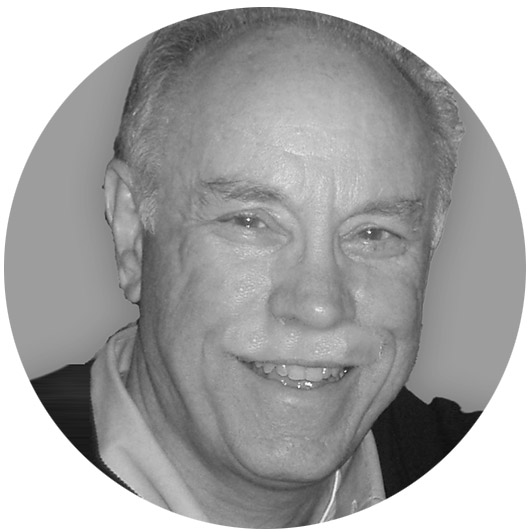
Dr. Bob Scudieri, Retired Pastor and Former President of Mission Nation Publishing, St. Louis
The Nicene Creed confesses “one, holy, catholic, and apostolic church.” Jesus did not invent the office of the apostle — the Jews and the Greeks had the concept. But He changed the understanding of “apostle” in a significant way — to mean “missionary.” What if we said in our confession, “We believe in one, holy, catholic and MISSIONARY church”? This sectional will contend that it is important for the church today to understand the “apostolic church” as a “missionary church.” To do this, this sectional will trace the term “apostle” and “apostolic church” from Jesus’ time to the Council of Nicaea and show how the term originated and how its meaning changed. Then it will show what we need to understand today to be a more missional church.
Presidents Room
The Formation and Coordination of High-Quality Professional Relationships within the Church: The Council of Nicaea and Today

Dr. Douglas Krengel, Sole Pastor, Immanuel Lutheran Church, Bridgman, Mich.
Healthy relationships among church workers are critical for the life and work of congregations and the wider church. The Council of Nicaea provides a notable historical example of collaboration and coordination for the good of the church. Based both on this example and on the presenter’s dissertation research on professional relationships between pastors and directors of early childhood development centers, this sectional will share insights and illustrations about forming and coordinating relationships among church workers.
Sieck Hall 101
Apocalyptic People: Daniel and Revelation Teach What is “The Holy Catholic Church”
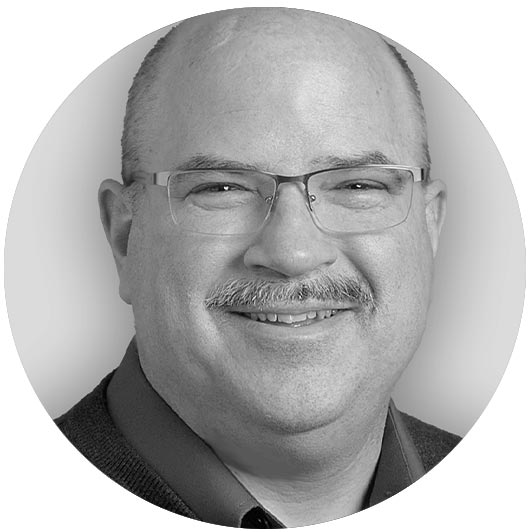
Dr. Tim Prince, Sole Pastor, Good Shepherd Lutheran Church, East Troy, Wis.
The apocalyptic visions of Daniel and Revelation emphasize Christ and His church. They show a picture of the exalted Son of Man and the people from every nation, tribe, people and language gathered around the throne of God (and of the Lamb). They speak of the people being made holy by the Messiah as well as His eternal kingdom-city (church) that is expanding to fill the entire earth. This presentation will show how the Nicene Creed’s confession of the church reflects the eschatological goals and promises conveyed in these visions, and it will summarize what these visions teach about the church.
Wyneken Hall 205
The Weimar Bible: The Study Bible of the Age of Lutheran Orthodoxy
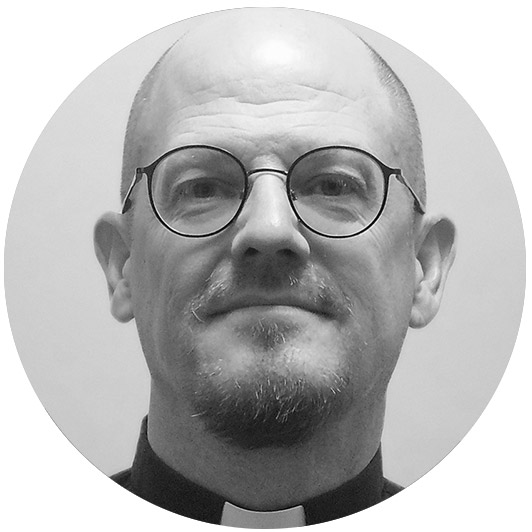
Dr. Jason Soenksen, Professor of Theology, Concordia University Wisconsin, Mequon, Wis.
The Weimar Bible was first published in 1640. Built upon Luther’s German Bible, the Weimer Bible featured work by Johann Gerhard and his student Salomon Glassius. It served as a compendium of orthodox Lutheran exegesis for layman and clergy alike for over two and a half centuries. The work was highly regarded by C.F.W. Walther, who wrote a preface to the edition published by Concordia Publishing House. This presentation provides a brief overview of the history of the Weimar Bible and its features. It focuses especially on the preface of Salomon Glassius, which lays out how to interpret the Scriptures. The presentation will also sample the Weimar Bible’s interpretation of a chapter of Scripture.
Wyneken Hall 206
Intelligent Preaching or Artificial Preaching: A Beginning Conversation about Artificial Intelligence and Sermon Construction

Rev. Drew Oswald, Pastor, St. Paul Lutheran Church, Utica, Neb.
Artificial intelligence (AI) is now mainstream. It presents a spectrum of options for preachers. On one extreme, preachers could refuse to use AI in any capacity. On the other hand, preachers could use AI to construct sermons. How should preachers think about these issues? What theological and confessional wisdom is available to guide their thinking? How do we wisely discern appropriate uses of AI? This presentation will propose Scriptural and confessional frameworks to promote wise thinking about the preaching task in an age of AI. It will give special attention to the personhood and embodiment of preachers. Participants will discuss opportunities and limitations for the uses of AI in preaching as well as learn potential options for using AI in sermon preparation.
Loeber Hall II
Tuesday, 3:15-4 p.m.
Should Lutherans Continue to Confess the Nicene Creed with the Filioque?
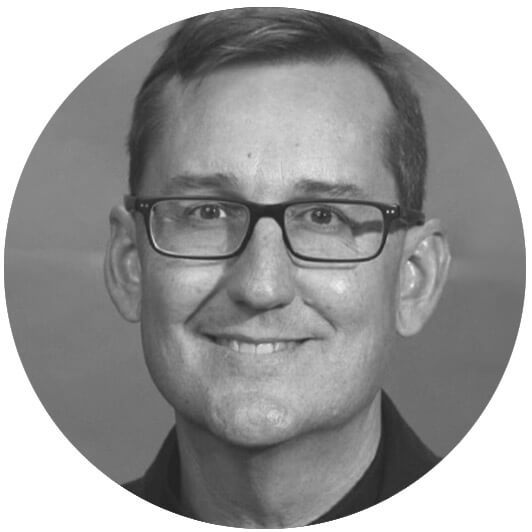
Dr. Carl Beckwith, Professor of Historical Theology, Concordia Theological Seminary, Fort Wayne, Ind.
The Council of Ephesus in 431 prohibited any addition to the creed from Nicaea in 325. And yet, no one confesses or uses liturgically the creed as formulated at the Council of Nicaea in 325. All orthodox Christians confess the Nicene Creed as revised and expanded at the Council of Constantinople in 381. In this sense, everybody adds to the Creed from Nicaea. Western Christians, particularly Lutherans, further augment this Creed with the filioque, confessing that the Holy Spirit proceeds from the Father and the Son. Orthodox Christians denounce this addition as false and contrary to Scripture. In 2024, the Lutheran World Federation (LWF) and the Orthodox Church issued a joint statement that agreed to remove the filioque from the Creed. Should the LCMS follow the lead of the LWF and remove the filioque from the Nicene Creed? This sectional will answer this question by considering the scriptural and historical arguments for the filioque from the early church to the Lutheran dogmaticians.
Werner Auditorium
Nicaea and Our Unmade World
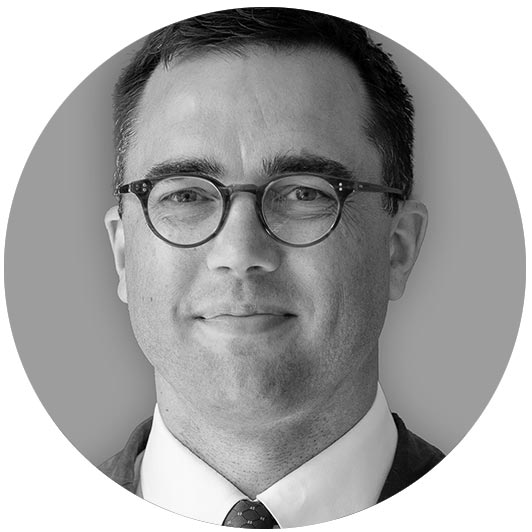
Dr. Thomas Pietsch, Assistant Professor of Theology, Concordia University Wisconsin, Mequon, Wis.
In its proclamation of the Creator/creature distinction, the Council of Nicaea confessed the full divinity of Christ against the Arians. But on the other side of the equation, it also confessed the status of the world as fully created. Historically, this has precluded confessing the world as eternal. Today, however, this dimension of the Nicene witness also challenges technological approaches to nature which would consider the world essentially unmade, awaiting the projection of human will and meaning. By engaging both conciliar thought and Joseph Ratzinger’s “Introduction to Christianity,” this sectional will argue that a full appropriation of Nicaea includes not only claims about God but also claims about the world that challenge prevailing norms and nostrums.
Wyneken Hall 205
The Holy Spirit, Lord and Giver of Life: Revealing God in the Fullness of Jesus

Rev. Kyle Wright, Senior Pastor, Holy Cross Lutheran Church, Collinsville, Ill.
This sectional will explore the role of the Holy Spirit in revealing the divinity of Jesus Christ, focusing especially on the Nicene Creed’s statement: “I believe in the Holy Ghost, the Lord and Giver of Life.” Drawing on both ancient and contemporary theologians, this session will argue that the Holy Spirit reveals the abstract truth of the divinity of the Son into reality, for our salvation. The theologians considered will include St. Athanasius, for his foundational contributions to Nicene theology; St. Gregory of Nyssa, for his developed Trinitarian Nicene thought; Dr. Leopoldo Sánchez, for his articulation of Spirit Christology and its modern ecclesial implications; and Dr. Khaled Anatolios, for his insights into how the Holy Spirit reveals Christ for the mission of the church. Through these theological perspectives, this sectional will demonstrate how the Holy Trinity is revealed in Scripture, doctrine, mission and the lived experience of the Christian.
Wyneken Hall 206
Befriending Neighbors: The Catholicity of the Church in Action

Jessica Bordeleau, Coordinator, Digital Publishing, Concordia Seminary, St. Louis
The Council of Nicaea, in both word and action, affirms the catholicity of the church. Just as the early church gathered together from all parts of the world to form a creed that united the church in belief, the age of migration has led multiple people groups to be united by their displacement, both physically and spiritually. Our church’s response to new people groups becoming part of our immediate community can be one of insulation or of welcome. Our response can affirm the catholicity of the church, the idea that the Gospel is for all people.
This sectional will discuss the need to prepare congregations to serve and empower immigrants and give them the tools to do it. The speaker will introduce “Befriending Neighbors,” a video-based curriculum that walks congregations through the process of starting to care for the immigrants in their community. This resource, developed by Concordia Seminary, uses the RSO Christian Friends of New Americans (CFNA) as the overarching example of a flourishing ministry. The videos and written curriculum trace CFNA’s small beginnings to its current ministry model. Participants will interact with the resource and the activities it facilitates as well as discuss strategies for implementing the curriculum in local congregations.
Loeber Hall II
Wednesday, 1-1:45 p.m.
The Importance of Nicaea for Luther, Melanchthon and the Lutheran Church of the 16th Century
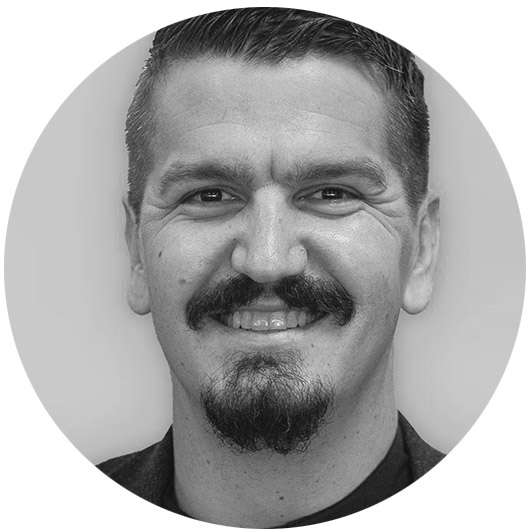
Dr. Jason Lane, Associate Professor of Historical Theology and Director of Research, Assessment and Academic Programming, Concordia Seminary, St. Louis
Martin Luther and Philipp Melanchthon both received the Nicene-Constantinopolitan (325/381) as a liturgical symbol of orthodox Christianity and a catholic confession of faith for the church of all times. Ever since the rise of liberal Protestantism in the 19th century, however, many theologians have assumed that Luther and Melanchthon either uncritically adopted the early church’s creed and therefore misunderstood it, or else that they saw something lacking in it which needed further development. With attention to the primary sources from Luther, Melanchthon and their students, this sectional will demonstrate the importance of the Nicene Creed in the Lutheran church of the 16th century. Since Rome and many churches still today believe and confess this ecumenical creed, special attention will be given to the reformers’ biblical exegesis. The reformers’ great confidence in the Creed derived from their conviction that the Nicene Creed agrees beautifully with Holy Scripture and is an excellent summary of Scripture’s teaching. This sectional will explore the implications of this conviction for the church and her fellowship today.
Werner Auditorium
What Kind of Messiah? What Kind of Kingdom?

Rev. Kendall Davis, Ph.D. candidate in New Testament at the University of Edinburgh, Edinburgh, Scotland, Assistant Professor of New Testament Studies at Concordia University St. Paul, St. Paul, Minn.
In the Nicene Creed we confess, “I believe in one Lord, Jesus the Messiah (χριστός).” However, what does it mean for Jesus to be the Messiah? It is a commonplace of much Christian preaching and interpretation to distinguish sharply between what Jews of Jesus’ day expected from the Messiah and how Jesus fulfills this role. Some go so far as to say that while the Jews expected a violent, conquering messiah to rule over an earthly kingdom, Jesus redefines what it means to be the Messiah and rejects the messianic expectations of his day.
In this sectional, Rev. Kendall Davis will discuss why this commonplace understanding of Jesus’ messiahship contradicts both the Gospels and the first several centuries of Christian interpretation. While the Gospels do present Jesus fulfilling his vocation as messiah in surprising ways, they do not reject Jewish messianic expectations. They assume that Jesus is king of an earthly, political kingdom who conquers his enemies. Davis will discuss how this commonplace misunderstanding of Jesus’ messianic vocation arises from a failure to understand the second coming of Jesus among several other core Christian doctrines.
Presidents Room
From Nicaea to Now: How the Church’s Confession of the Incarnate Son Addresses the Problem of Gender Identity Ideology

Caitlin Dinger, Ph.D. student
What is a man? What is a woman? Answers today are often given in terms of gender as a culturally constructed performance rather than created biological sex. We see this in the 2015 Vanity Fair cover featuring Caitlyn Jenner. It reinforced the idea that womanhood is a role to be performed, not an embodied reality. But we also see this when Christian influencers promote “trad wife” culture. It reduces womanhood to behavioral norms and aesthetic choices shaped more by culture than grounded in creation. This presentation argues that the Nicene confession of the Son’s incarnation is essential to clarifying contemporary confusions about gender identity. The eternal Word became flesh not in abstraction or symbol, but in a real, human body. This confession of Jesus Christ — who is the exact imprint of God’s nature — grounds our understanding of personhood in the goodness of creation, the reality of the body and the concrete particularity of human life.
Sieck Hall 101
The Labor Pains of Nicaea and the Birth of Christian Psychotherapy
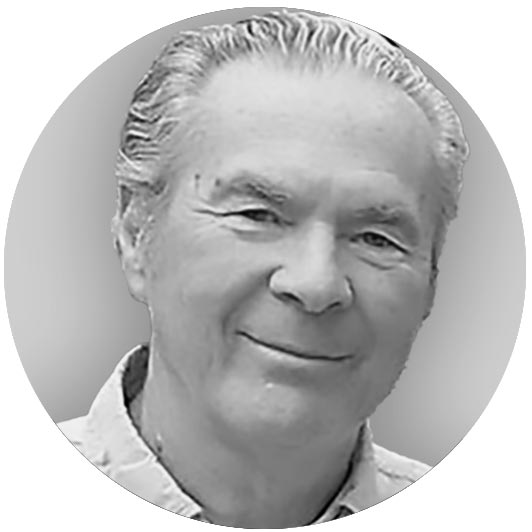
Rev. Leroy Leach, Retired Pastor, Conway, Ark.
Amid persecution, paganism, heresies and the first two ecumenical councils, there was also the rise of fervent monasticism. We know and study the writings of the Irenaeus, Athanasius, Cappadocian Fathers and their battles with heretics, especially Arianism. But we learn very little about the simultaneous great movement of monasticism and the writings of the Desert Fathers. Evagrius of Ponticus (345-399) is the least known of the Cappadocian “Rat Pack” (Basil the Great, his brother Gregory of Nyssa and their friend Gregory of Nazianzus), yet he became known as the Father of Psychotherapy. His monastic writings have given the church a rich history of the therapeutic science which focuses on hesychastic (stillness), neptic (vigilance) and philokalic (prayer focusing on love of the beautiful) facets of the contemplative tradition. This is especially true in the eastern church. All of this is intimately and intentionally connected to Baptism and the Eucharistic life of the church. The teachings, techniques and biblical principles found in these writings are vital tools given to the church and especially pastors as Seelsorgers to combat the sinful passions and acedia (soul-sickness, despondency) that plagues our culture and churches today.
Wyneken Hall 206
Wednesday, 2-2:45 p.m.
What Does It Mean for the True Visible Church?

Dr. Geoffrey Robinson, Executive for Outreach, Human Care, LCMS Indiana District, Fort Wayne, Ind
The Council of Nicaea was gathered to deal with doctrinal aberrations of the day. The actions of the Council of Nicaea set forth orthodox teaching in contradistinction to heterodox teaching which enabled Martin Luther and later C.F.W. Walther to clarify further orthodox Christian teaching considering the aberrations of doctrine in their respective days. Just as the Nicene creed is integral to the confession of orthodox Christianity so also a quia Subscription to The Lutheran confessions and acceptance of the True Visible Church doctrine as posited by C.F.W. Walther are integral to orthodox confessional Lutheranism. This sectional will endeavor to explore the following questions: How does the Council of Nicaea inform and affect the True Visible Church Doctrine as posited by C.F.W. Walther? Is the True Visible Church Doctrine still applicable today? Finally, what does the Council of Nicaea and the True Visible Church have to say for mission outreach in general and new congregation starts in particular?
Werner Auditorium
Jesus’ Ascension: A Neglected Nicene Doctrine Challenges Calvin’s Teaching
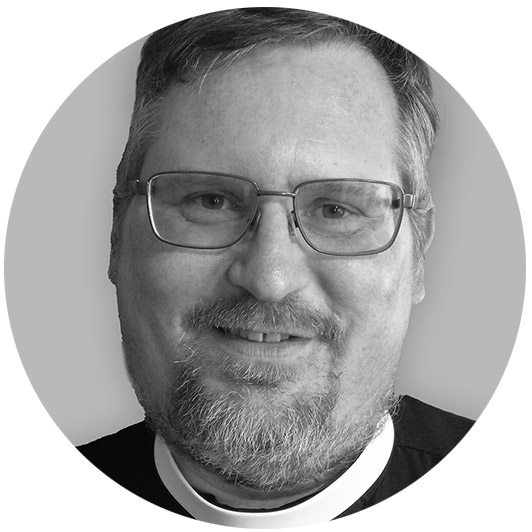
Rev. Robert Mayes, Pastor, Immanuel and Zion St. John Lutheran Churches, Beemer and Wisner, Neb.
Though Jesus’ ascension into heaven is found in the Nicene and early creeds, it has not received much attention among Lutherans. Nonetheless, the ascension is an important part of John Calvin’s Christology and theology of the Lord’s Supper. Calvin challenged the Lutheran teaching of the real presence partly based on how he understood Jesus’ ascension. In order to help Lutherans and others rebut Calvin’s claims, a deeper Scriptural examination of the teaching of the ascension will be made. It will be shown that Calvin’s sacramental teaching has misunderstood Jesus’ ascension, and that even this neglected creedal doctrine supports the Lutheran teaching.
Presidents Room
Countdown to the Creed: Some of the Uses of the Number Five Within the Old Testament and Four Within the New Testament
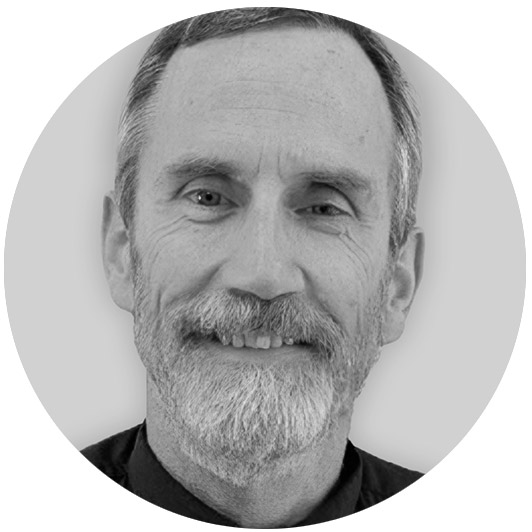
Rev. Paul Landgraf, Dual Parish Pastor, Pilgrim Lutheran Church, Chamois, Mo., and St. John Lutheran Church, Drake, Mo.
“The Bible Code” book took the idea of the importance of biblical numbers way too far. But in the Hebrew language, letters were also numbers, and the two always had a close connection. This sectional will look at the literary-theological structures of some of the significant parts of both testaments, focusing primarily on the number five being an important number within the Old Testament and four within the New Testament. Participants will be given some time to share some of their perspectives regarding the important numbers from either Testament that they may have discovered in the past.
Wyneken Hall 205
Magnify Christ’s Honor: The Nicene Logic of Justification by Faith
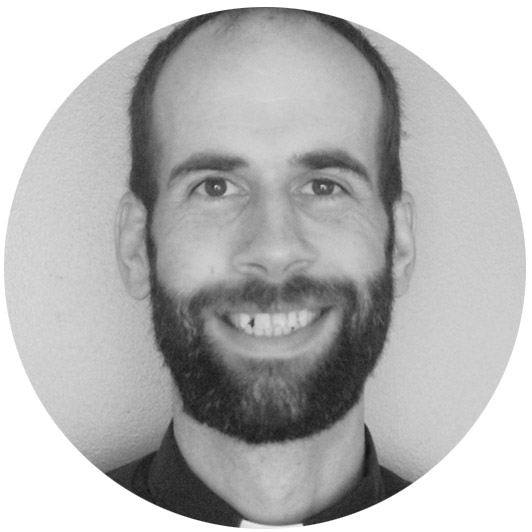
Rev. Joel Meyer, Pastor, Holy Trinity Lutheran Church, Kingsland, Ga.
The Lutheran Confessions insist that the doctrine of justification is the teaching on which the church stands or falls. However, the Nicene Creed’s confession that Jesus is of one substance with the Father is the ground of all Christian orthodoxy. Are Lutheran claims about justification exaggerated, or worse yet an innovation? This presentation will argue that the Lutheran doctrine of justification is consistent with the Nicene confession. This argument agrees with the recent scholarship that contends that the meaning of Trinitarian doctrine is found in the systematic reorganization of the Christian faith around the absolute primacy of Christ. The doctrine of justification by faith advanced by the Lutheran Confessions does exactly this. The doctrine leads us to magnify Christ’s honor by placing our trust in Him above all things. This presentation will argue that trust is a crucial element in confessing Jesus’ divinity, and it will draw some conclusions for our preaching and teaching.
Wyneken Hall 206
Additional Continuing Education Opportunities
Faith and Writing Workshop
Concordia Seminary’s “Faith and Writing” workshop explores various forms of creative writing — starting a blog, creating a sermon or devotion, “traditional” forms of creative writing (story, nonfiction, drama, poetry) — and everything in between.
Lay Bible Institute
Calling lay people, students involved in homiletical education, pastors and others interested in the proclamation of the Gospel in today’s world: the Lay Bible Institute is for you!
Multiethnic Symposium
The Seminary’s annual Multiethnic Symposium brings together Lutherans and mission leaders of various ethnicities from across the country for workshops, discussions and worship.
Pre-Lenten Workshop
The Pre-Lenten Workshop includes sermon manuscripts, textual notes, orders of service for midweek services and also suggestions for the Sundays of Lent to help pastors in developing their own worship resources.
Workshop Series
Hosted by congregations across the country May through August, and led by Seminary faculty, these workshops offer an opportunity to delve deeply into topics ranging from the teachings of Martin Luther to pastoral tools, such as preaching, responding to conflict and teaching confirmation.